




You will not be allowed to compare more than 4 products at a time
View compareProduct
Sweet Woodruff | Galium odoratum
Sweet Woodruff | Galium odoratum
Regular price
$12.95 USD
Sale price
$12.95 USD
Regular price
Unit price
per
Shipping calculated at checkout.
SKU: WOOD SWEET-1
| Category | Details |
|---|---|
| Plant Type | Deciduous |
| Light Requirement | Partial, Full Shade |
| Soil Condition | Well Drained, Moist, Wet |
| Mature Height | 0 - 1ft |
| Growth Rate | Medium-growing |
| Planting Zone | 4, 5, 6, 7, 8 |
Now Booking for Spring
Sub total:
$12.95Share
Couldn't load pickup availability


Description
Planting Instructions
Shipping Information
Reviews
Description
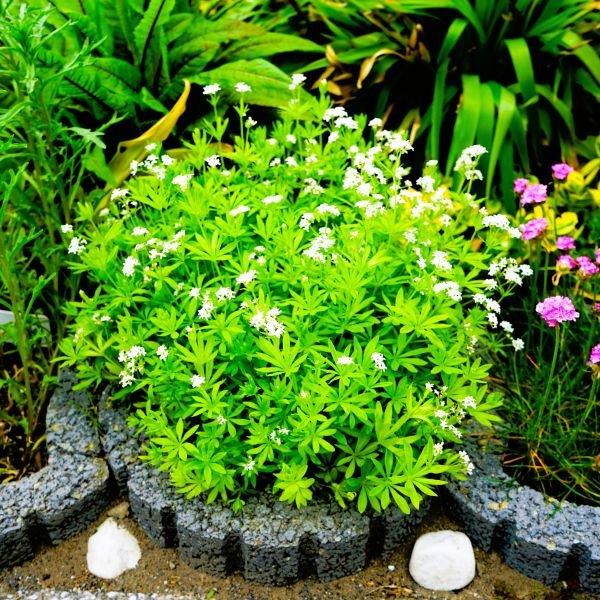
Sweet Woodruff (Galium odoratum) is a low-growing, shade-loving perennial that does something most groundcovers can't — it smells extraordinary. Whorled, bright green foliage releases a sweet vanilla-hay fragrance when brushed or dried, and every spring the plant erupts in a constellation of delicate white star-shaped flowers. It spreads steadily to form a lush, weed-suppressing carpet in the shadiest, dampest corners of the garden where little else thrives. Hardy in zones 4–8.
Best for: Shade gardens, woodland plantings, under trees, damp low spots, fragrant borders, and fairy or cottage garden designs.
Why Gardeners Choose Sweet Woodruff
- Exceptional fragrance: Foliage releases a distinctive sweet, vanilla-like scent when brushed or dried — one of the most fragrant groundcovers available. Traditionally used to flavor May wine and scent sachets and potpourris.
- Thrives in deep shade: One of the few groundcovers that performs well in full shade, including the dry shade under established tree canopies.
- Spring flower display: Masses of tiny white star-shaped flowers blanket the plant in late spring, brightening dark garden corners and attracting early pollinators.
- Self-spreading carpet: Creeps by rhizomes and self-seeds to fill open ground, forming a dense, low mat that suppresses weeds without aggressive invasiveness.
- Deer resistant: Not a preferred browse plant — a practical advantage in gardens with deer pressure.
- Pollinator friendly: Spring blooms attract bees and beneficial insects before most other perennials have fully emerged.
Planting & Care
- Light: Partial shade to full shade. Performs best in dappled woodland light; tolerates deep shade better than most groundcovers.
- Soil: Prefers consistently moist, well-drained soil with good organic content. Tolerates wet conditions. May go summer-dormant in very dry sites — it recovers when moisture returns.
- Growth rate: Medium — spreads steadily by rhizomes and self-seeding to fill in over 2–3 seasons.
- Mature size: 6–12 inches tall; spreads 18–24 inches wide per plant, expanding by rhizomes each season.
- Spacing: 12–18 inches apart for gradual fill-in; closer spacing for faster coverage.
- Watering: Keep consistently moist during establishment. Drought-stressed plants may go dormant in summer — water deeply to revive them.
- Feeding: Top-dress with compost in early spring. Light fertilization not required once established in rich soil.
- Pruning: Cut back hard in early spring before new growth emerges to refresh the planting and keep it tidy.
Best Uses
- Woodland and shade gardens under established trees
- Damp, shaded low spots and rain garden edges
- Fragrant border edging along shaded walkways
- Fairy garden and cottage garden plantings
- Pollinator and herb gardens
- Grave site and memorial plantings
- Culinary and craft use — dried foliage for sachets, teas, and May wine
Grows Best In
- USDA Zones: 4–8
- Climate notes: Thrives in cool, moist, woodland conditions. Performs well in humid climates with consistent moisture. May go dormant during hot, dry summers but recovers reliably when watered. Not recommended for hot, arid climates outside its zone range.
Problem Solved
Sweet Woodruff is the answer for damp, shaded problem areas — those low spots under trees or along north-facing foundations where nothing seems to thrive. It fills those gaps with lush, fragrant, flowering coverage that requires almost no maintenance once established.
It’s also the right choice for gardeners who want a groundcover that does double duty as a sensory garden plant — the fragrance alone makes it worth growing. For a shade companion with bold blue spring flower spikes and a faster, denser spread, pair with Ajuga ‘Blueberry Muffin’ — the two layer beautifully together in woodland and shade garden designs.
Pro Tip
Plant Sweet Woodruff in the fall or early spring when soil temperatures are cool and moisture is reliable — these are the conditions it loves most, and establishment is dramatically faster than summer planting. Top-dress with a thin layer of shredded leaf mulch to retain moisture and mimic the woodland floor conditions where it thrives naturally. For taller vertical interest in the same damp shade setting, Ostrich Ferns make a dramatic backdrop — their bold architectural fronds rise 3–5 feet above the Sweet Woodruff carpet for a layered woodland effect.
Shipping Information
- Ships as container-grown plants — available in 3.5" pots or quart-size containers.
- Ships to all 48 contiguous states.
Frequently Asked Questions
Is Sweet Woodruff invasive?
It spreads steadily but is not considered aggressively invasive. It’s easy to pull back if it spreads beyond its intended area.
Will it grow in dry shade?
It tolerates dry shade but may go summer-dormant. It performs best with consistent moisture. Water deeply during dry spells and it will revive.
Can I use it in cooking?
Yes — Sweet Woodruff is traditionally used to flavor May wine and can be used dried in teas and sachets. The fresh leaves have little scent; the fragrance intensifies when dried.
Does it flower?
Yes — delicate white star-shaped flowers appear in late spring, covering the plant and attracting early pollinators.
Is it deer resistant?
Yes — Sweet Woodruff is generally deer resistant and not a preferred browse plant.
Related Collections
Planting Instructions
How Your Plants Are Shipped & Care Instructions
To ensure a seamless transition to your garden, please follow the specific steps below based on the type of plant you ordered:
📦 1. Container-Grown Plants
Our container-grown plants are shipped with fully established root systems nestled in premium potting media.
- Unpack & Water Instantly: Carefully remove the protective packaging and check the soil moisture. Give the pot a thorough watering until moisture runs out the bottom drainage holes.
- Acclimation Period: Place your container plant in a sheltered, partially shaded location for 2 to 3 days to help it recover from transit before moving it to full sun.
- Planting Depth: Plant at the exact same depth it was sitting in its shipping container, gently loosening the outer roots if they are encircling the root ball.
- Moisture Control: Keep the soil consistently damp but never soggy for the first few weeks as the roots expand.
🌱 2. Seedling & Liner Bare-Root Plants
Seedlings and liners are young, vibrant plants shipped without pots to make transit highly efficient.
- Immediate Attention: Unpack immediately upon arrival. If you cannot plant them right away, keep the roots moist and store them in a cool, shaded location out of the wind.
- Hydration First: Soak the roots in a bucket of water for 1 to 2 hours right before planting to wake them up.
- Planting: Spread the roots out naturally in the planting hole. Ensure the crown (where the roots meet the stem) sits right at the soil level. Water thoroughly to settle the soil around the roots.
🌾 3. Groundcover Bare-Root Plants
Groundcover bare-root bundles (like Vinca minor or Sedum) are shipped dormant or semi-dormant, ready to take off once in the ground.
- Check Moisture: Open the bundle immediately. The packing material around the roots should be damp. If planting is delayed a day or two, lightly mist the roots to keep them from drying out.
- Soak Before Planting: Soak the root systems in water for about an hour before putting them in the ground.
- Spacing & Depth: Plant them at the same depth they were growing previously, firming the soil gently over the roots to eliminate any air pockets. Water heavily right after planting and keep the area consistently moist until established.
Shipping Information
Orders containing only hard goods generally ship right away
as the inventory allows. Those items ship year-round and generally within one
week.
When ordering plants during fall or spring shipping, we will
set your order for the next available shipping week appropriate for your
location. April and May are our busiest months, and sometimes shipping delays
happen. Plants may be processed later than scheduled or the shipping department may get behind. This is not the norm, but it does sometimes happen. Please bear with us if this happens.
Our bare-root (field-grown) trees and shrubs typically arrive at the facility for shipping in November, December, and January (for fall shipping) and in February, March, April, and May (for spring shipping).
An example of month-by-month shipping would be as follows, as plants are available:
January - zones 9 - 10
February - zones 8 - 10
March - zones 7 - 10
April - zones 6 - 10
May - zones 5 - 9
June - zones 3 - 8
July - zones 3 - 7
August - zones 4 - 7
September - zones 5 - 8
October - zones 5 (some areas) - 9
November - zones 6 (some areas) - 10
December - zones 8 - 10