



You will not be allowed to compare more than 4 products at a time
View compareProduct
Ligustrum Ibolium North Privet
Ligustrum Ibolium North Privet
Regular price
$19.95 USD
Sale price
$19.95 USD
Regular price
Unit price
per
Shipping calculated at checkout.
SKU: PRIVET IB BR-5
| Category | Details |
|---|---|
| Plant Type | Deciduous |
| Light Requirement | Full Sun, Partial |
| Soil Condition | Dry, Well Drained |
| Bloom Season | Spring |
| Bloom Color | White |
| Mature Height | 6 - 10 ft |
| Growth Rate | Fast-Growing |
| Planting Zone | 4, 5, 6, 7 |
Sub total:
$19.95Share
Couldn't load pickup availability


Description
Planting Instructions
Shipping Information
Reviews
Description
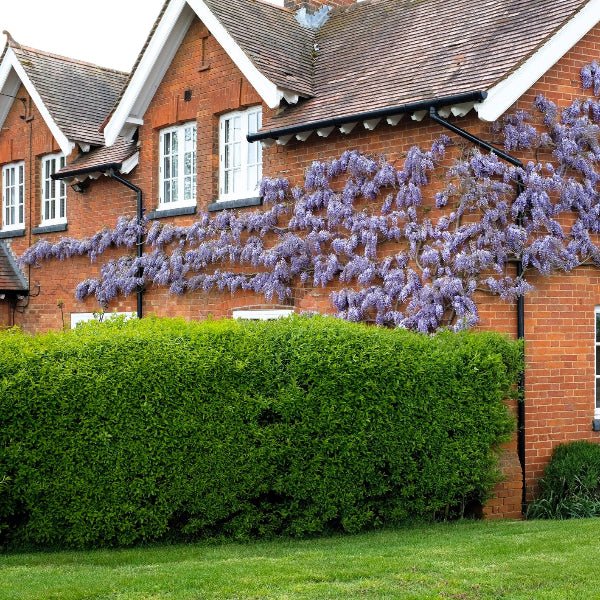
Ligustrum Ibolium (Ligustrum × ibolium), also called Northern Privet or Ibolium Privet, is one of the fastest-growing and most cold-hardy hedge shrubs available — a dense, upright deciduous shrub that reaches 8–12 feet tall and creates a thick, multi-stemmed privacy screen in a fraction of the time it takes evergreen alternatives to establish. Fragrant white flowers in late spring attract pollinators, followed by small blue-black berries with wildlife value. Incredibly adaptable to a wide range of soils and conditions. Hardy in zones 4–7.
Best for: Fast privacy hedges, windbreaks, property line screens, shrub borders, and formal or informal hedge plantings where rapid establishment and cold hardiness are priorities.
Please note: Due to agricultural regulations, Ligustrum Ibolium cannot ship to CT, MA, ME, NH, or TN.
Why Gardeners Choose Ligustrum Ibolium North Privet
- Exceptionally fast growth: One of the fastest-growing hedge shrubs in its hardiness range — gains 2–3 feet per year under good conditions, reaching functional hedge height within 2–3 seasons from bare root planting. Few shrubs match its speed for creating a quick privacy screen.
- Cold-hardy to zone 4: Outperforms many popular privacy shrubs in cold climates — reliably hardy where more tender options like Leyland Cypress struggle. The go-to fast hedge for the Upper Midwest, New England, and northern Plains.
- Dense, multi-stemmed habit: Produces a thick, bushy form that fills in solidly from the ground up, creating a true privacy screen rather than a see-through framework. Responds very well to shearing for a formal, tight hedge.
- Fragrant spring blooms: Clusters of small white flowers in late spring emit a sweet fragrance and attract bees and butterflies at an important early-season forage period.
- Wildlife berries: Small blue-black berries follow the blooms and provide food for birds through fall and winter.
- Extremely adaptable: Tolerates a wide range of soil types, drought once established, heat, pollution, and urban conditions — one of the most forgiving hedge shrubs available for difficult sites.
Planting & Care
- Light: Full sun to partial shade. Best density and fastest growth in full sun; tolerates shade but may be less vigorous.
- Soil: Highly adaptable — tolerates clay, sandy, and average soils. Prefers well-drained conditions but handles a wide range. Drought-tolerant once established.
- Growth rate: Fast — 2–3 feet per year. Reaches 8–12 feet tall and 6–8 feet wide at maturity.
- Spacing for hedge: 3–4 feet apart for a tight, solid privacy hedge; 4–6 feet apart for a looser, more informal screen.
- Watering: Keep soil evenly moist during the first growing season to establish roots. Drought-tolerant afterward — minimal supplemental water needed once established.
- Feeding: Balanced slow-release fertilizer in early spring during the first 2–3 years. Not required once fully established.
- Pruning: Shear 1–2 times per year (late spring after bloom and again in midsummer) to maintain a tight, formal hedge shape. Can also be left to grow naturally as an informal screen with minimal pruning. Responds vigorously to hard pruning if renovation is needed.
- Bare root planting: Ships as bare root plants, 1–2 feet tall. Plant immediately upon receipt, keep roots moist until planted, and water thoroughly after planting. Bare root establishment is fast — expect strong first-season growth.
Best Uses
- Fast privacy hedges and screens along property lines
- Windbreaks and sound barriers
- Formal sheared hedges in traditional landscape designs
- Informal shrub borders and naturalistic screens
- Foundation plantings for large-scale coverage
- Wildlife habitat and bird-friendly plantings
- Urban and suburban landscapes with poor or compacted soils
Grows Best In
- USDA Zones: 4–7
- Climate notes: Cold-hardy through zone 4 and broadly adaptable across the Upper Midwest, Northeast, Mid-Atlantic, and South. Handles urban heat, pollution, and difficult soils reliably. Also performs well in Arizona and other hot, dry climates once established. Not suited for zones 8 and above where heat and humidity may limit performance.
Problem Solved
Ligustrum Ibolium solves the most common landscape privacy problem: needing a dense, tall screen as fast as possible, especially in colder climates where faster-growing options aren’t reliably hardy. It outpaces most cold-hardy shrubs on speed while delivering the dense, multi-stemmed habit that actually blocks views from the ground up — unlike many conifers that take years to develop real screening value.
For gardeners who want a fast, low-maintenance, adaptable hedge that works in zone 4 and doesn’t require constant attention, Ibolium Privet is one of the best options available. Pair with Thuja Green Giant for an evergreen backdrop, or with Murray Cypress for a mixed privacy planting with year-round screening.
Pro Tip
For the fastest, densest hedge, plant bare root Ibolium Privet in early spring as soon as the ground is workable — bare root plants establish quickly in cool spring soil and hit the ground running when warm weather arrives. Shear once in late spring after the flowers fade and again in midsummer to force dense lateral branching from the base up. A hedge sheared twice in its first two seasons will be noticeably fuller than one left to grow unpruned.
Shipping Information
- Ships as field-grown bare root plants, 1–2 feet tall — 5 plants per order.
- Cannot ship to: CT, MA, ME, NH, or TN due to state agricultural regulations.
- Ships to all other contiguous US states.
Frequently Asked Questions
How fast does it actually grow?
2–3 feet per year under good conditions — one of the fastest hedge shrubs available in zones 4–7. Bare root plants establish quickly and often put on 18–24 inches of growth in their first full season.
Is it evergreen?
No — Ligustrum Ibolium is deciduous and loses its leaves in fall. It provides a dense branching structure in winter but not full visual screening year-round. For evergreen screening, consider Thuja Green Giant or Murray Cypress.
How far apart should I plant for a hedge?
3–4 feet apart for a tight, solid privacy hedge that closes in within 2–3 seasons. 4–6 feet for a looser, more informal screen.
Why can’t it ship to certain states?
Some states restrict Ligustrum species due to invasive species concerns. Despite being a well-behaved hedge shrub in most landscapes, it is subject to these regulations in CT, MA, ME, NH, and TN.
How do I plant bare root shrubs?
Plant immediately upon receipt — do not let roots dry out. Soak roots in water for 1–2 hours before planting, dig a hole wide enough to spread roots naturally, backfill with native soil, and water thoroughly. Keep soil consistently moist for the first 4–6 weeks until established.
Planting Instructions
How Your Plants Are Shipped & Care Instructions
To ensure a seamless transition to your garden, please follow the specific steps below based on the type of plant you ordered:
📦 1. Container-Grown Plants
Our container-grown plants are shipped with fully established root systems nestled in premium potting media.
- Unpack & Water Instantly: Carefully remove the protective packaging and check the soil moisture. Give the pot a thorough watering until moisture runs out the bottom drainage holes.
- Acclimation Period: Place your container plant in a sheltered, partially shaded location for 2 to 3 days to help it recover from transit before moving it to full sun.
- Planting Depth: Plant at the exact same depth it was sitting in its shipping container, gently loosening the outer roots if they are encircling the root ball.
- Moisture Control: Keep the soil consistently damp but never soggy for the first few weeks as the roots expand.
🌱 2. Seedling & Liner Bare-Root Plants
Seedlings and liners are young, vibrant plants shipped without pots to make transit highly efficient.
- Immediate Attention: Unpack immediately upon arrival. If you cannot plant them right away, keep the roots moist and store them in a cool, shaded location out of the wind.
- Hydration First: Soak the roots in a bucket of water for 1 to 2 hours right before planting to wake them up.
- Planting: Spread the roots out naturally in the planting hole. Ensure the crown (where the roots meet the stem) sits right at the soil level. Water thoroughly to settle the soil around the roots.
🌾 3. Groundcover Bare-Root Plants
Groundcover bare-root bundles (like Vinca minor or Sedum) are shipped dormant or semi-dormant, ready to take off once in the ground.
- Check Moisture: Open the bundle immediately. The packing material around the roots should be damp. If planting is delayed a day or two, lightly mist the roots to keep them from drying out.
- Soak Before Planting: Soak the root systems in water for about an hour before putting them in the ground.
- Spacing & Depth: Plant them at the same depth they were growing previously, firming the soil gently over the roots to eliminate any air pockets. Water heavily right after planting and keep the area consistently moist until established.
Shipping Information
Orders containing only hard goods generally ship right away
as the inventory allows. Those items ship year-round and generally within one
week.
When ordering plants during fall or spring shipping, we will
set your order for the next available shipping week appropriate for your
location. April and May are our busiest months, and sometimes shipping delays
happen. Plants may be processed later than scheduled or the shipping department may get behind. This is not the norm, but it does sometimes happen. Please bear with us if this happens.
Our bare-root (field-grown) trees and shrubs typically arrive at the facility for shipping in November, December, and January (for fall shipping) and in February, March, April, and May (for spring shipping).
An example of month-by-month shipping would be as follows, as plants are available:
January - zones 9 - 10
February - zones 8 - 10
March - zones 7 - 10
April - zones 6 - 10
May - zones 5 - 9
June - zones 3 - 8
July - zones 3 - 7
August - zones 4 - 7
September - zones 5 - 8
October - zones 5 (some areas) - 9
November - zones 6 (some areas) - 10
December - zones 8 - 10