



You will not be allowed to compare more than 4 products at a time
View compareProduct
Dwarf Plumbago
Dwarf Plumbago
Regular price
$12.95 USD
Sale price
$12.95 USD
Regular price
Unit price
per
Shipping calculated at checkout.
SKU: PLUMBAGO PIN-1
| Category | Details |
|---|---|
| Plant Type | Deciduous |
| Light Requirement | Full Sun, Partial |
| Soil Condition | Well Drained |
| Bloom Season | Summer, Autumn |
| Bloom Color | Blue |
| Mature Height | 0 - 1ft |
| Growth Rate | Fast-Growing |
| Planting Zone | 5, 6, 7, 8, 9 |
Sub total:
$12.95Share
Couldn't load pickup availability

Description
Planting Instructions
Shipping Information
Reviews
Description
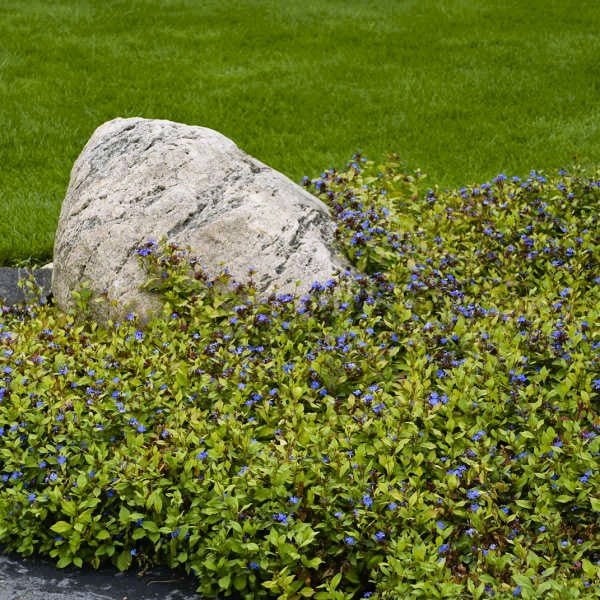
Dwarf Plumbago (Ceratostigma plumbaginoides) is one of the best-kept secrets in the perennial groundcover world — a tough, spreading mat-former that solves the most frustrating gap in the garden calendar: late summer and fall color. When most groundcovers are fading, Dwarf Plumbago erupts in vivid cobalt-blue flowers, then transitions to deep burgundy-red fall foliage before going dormant for winter. Dense, glossy green leaves suppress weeds through the growing season. Hardy in zones 5–9.
Best for: Sunny to partly shaded borders, slopes, late-season color gaps, bee gardens, fall interest plantings, and low-maintenance groundcover in dry or average soils.
Why Gardeners Choose Dwarf Plumbago
- Stunning late-season color — two ways: Brilliant cobalt-blue flowers from late summer through fall, followed by deep burgundy-red foliage as temperatures drop — delivering multi-season interest when most groundcovers have nothing to offer.
- One of the truest blues in the garden: Dwarf Plumbago produces some of the most vivid, saturated blue flowers of any hardy perennial groundcover — a color that stands out sharply against fall’s warm tones.
- Dense weed-suppressing mat: Glossy green foliage on wiry stems forms a tight, low carpet that closes out weeds effectively through the growing season.
- Drought-tolerant once established: Well-adapted to dry, average soils once roots are established — minimal supplemental watering needed after the first season.
- Deer and rabbit resistant: Generally avoided by both deer and rabbits, making it a reliable choice in gardens with wildlife pressure.
- Pollinator magnet: Late-season blooms are a valuable nectar source for bees and butterflies when most other flowering plants have finished.
Planting & Care
- Light: Full sun to partial shade. Full sun produces the most prolific flowering; partial shade is tolerated but bloom density may reduce.
- Soil: Average to dry, well-drained soil. Avoid consistently wet or waterlogged sites — good drainage is important for long-term performance.
- Growth rate: Fast — spreads steadily by rhizomes to fill in open ground over 2–3 seasons.
- Mature size: 6–10 inches tall; spreads 12–18 inches wide per plant, expanding each season by rhizomes.
- Spacing: 12–18 inches apart for solid coverage within 2 seasons.
- Watering: Water consistently during the first growing season to establish. Very drought-tolerant afterward.
- Feeding: Top-dress with compost in early spring. Light fertilization is beneficial in poor soils but not required once established.
- Pruning: Cut back old stems to the ground in early spring before new growth emerges. New shoots emerge late in spring — don’t be alarmed if the plant looks slow to wake up.
Best Uses
- Sunny to partly shaded groundcover borders
- Slopes and erosion-prone areas
- Late-season color in mixed perennial beds
- Bee and pollinator gardens
- Container plantings for fall patio color
- Coastal and drought-tolerant landscape designs
- Lawn-free yard solutions in sunny areas
Grows Best In
- USDA Zones: 5–9
- Climate notes: Hardy and adaptable across a wide range of climates. Performs well in hot summers and cold winters within its zone range. Late to emerge in spring — mark planting locations to avoid accidentally digging it up. Spreads more vigorously in warmer zones.
Problem Solved
Dwarf Plumbago fills the single biggest color gap in the landscape — late summer through fall, when most groundcovers are either done blooming or fading to brown. It delivers cobalt-blue flowers precisely when the garden needs them most, then follows up with brilliant burgundy fall foliage for a second wave of color before dormancy.
It’s also the right solution for gardeners who want a low-maintenance, weed-suppressing groundcover for sunny slopes or borders without the constant watering that many flowering perennials demand. For a taller shrub companion that also delivers spectacular fall color and interest, pair with Spicebush — its golden-yellow fall foliage and red berries create a layered fall display that complements Plumbago’s cobalt-blue and burgundy perfectly.
Pro Tip
Dwarf Plumbago is a notoriously late emerger in spring — don’t panic if nothing appears until late April or even May. Mark your planting locations in fall so you don’t accidentally disturb the roots while doing spring cleanup. Once it does emerge, growth accelerates quickly and the plant fills in fast through the summer months. For a lower-growing blue-flowered groundcover that blooms earlier in the season (spring through summer), Blue Star Creeper pairs beautifully with Dwarf Plumbago for back-to-back blue flower coverage across the season.
Shipping Information
- Ships as container-grown plants — available in pint or quart-size pots.
- Ships to all 48 contiguous states.
Frequently Asked Questions
When does Dwarf Plumbago bloom?
Late summer through fall — typically August through October depending on your zone. It blooms later than most perennials, filling the gap when other plants have finished.
Is it truly blue?
Yes — one of the truest, most saturated blues available in a hardy perennial groundcover. The cobalt-blue flowers are a standout color that photographs beautifully against fall foliage.
Will it spread?
Yes — it spreads by rhizomes at a fast pace once established. It’s not invasive but will gradually expand its footprint each season. Easy to pull back at the edges if needed.
Why isn’t it coming up in spring?
Dwarf Plumbago is one of the last perennials to emerge in spring — often not showing until late April or May. This is completely normal. Don’t dig it up; it will appear.
Is it deer resistant?
Yes — generally not browsed by deer or rabbits, making it a reliable choice in wildlife-heavy landscapes.
Related Collections
Planting Instructions
How Your Plants Are Shipped & Care Instructions
To ensure a seamless transition to your garden, please follow the specific steps below based on the type of plant you ordered:
📦 1. Container-Grown Plants
Our container-grown plants are shipped with fully established root systems nestled in premium potting media.
- Unpack & Water Instantly: Carefully remove the protective packaging and check the soil moisture. Give the pot a thorough watering until moisture runs out the bottom drainage holes.
- Acclimation Period: Place your container plant in a sheltered, partially shaded location for 2 to 3 days to help it recover from transit before moving it to full sun.
- Planting Depth: Plant at the exact same depth it was sitting in its shipping container, gently loosening the outer roots if they are encircling the root ball.
- Moisture Control: Keep the soil consistently damp but never soggy for the first few weeks as the roots expand.
🌱 2. Seedling & Liner Bare-Root Plants
Seedlings and liners are young, vibrant plants shipped without pots to make transit highly efficient.
- Immediate Attention: Unpack immediately upon arrival. If you cannot plant them right away, keep the roots moist and store them in a cool, shaded location out of the wind.
- Hydration First: Soak the roots in a bucket of water for 1 to 2 hours right before planting to wake them up.
- Planting: Spread the roots out naturally in the planting hole. Ensure the crown (where the roots meet the stem) sits right at the soil level. Water thoroughly to settle the soil around the roots.
🌾 3. Groundcover Bare-Root Plants
Groundcover bare-root bundles (like Vinca minor or Sedum) are shipped dormant or semi-dormant, ready to take off once in the ground.
- Check Moisture: Open the bundle immediately. The packing material around the roots should be damp. If planting is delayed a day or two, lightly mist the roots to keep them from drying out.
- Soak Before Planting: Soak the root systems in water for about an hour before putting them in the ground.
- Spacing & Depth: Plant them at the same depth they were growing previously, firming the soil gently over the roots to eliminate any air pockets. Water heavily right after planting and keep the area consistently moist until established.
Shipping Information
Orders containing only hard goods generally ship right away
as the inventory allows. Those items ship year-round and generally within one
week.
When ordering plants during fall or spring shipping, we will
set your order for the next available shipping week appropriate for your
location. April and May are our busiest months, and sometimes shipping delays
happen. Plants may be processed later than scheduled or the shipping department may get behind. This is not the norm, but it does sometimes happen. Please bear with us if this happens.
Our bare-root (field-grown) trees and shrubs typically arrive at the facility for shipping in November, December, and January (for fall shipping) and in February, March, April, and May (for spring shipping).
An example of month-by-month shipping would be as follows, as plants are available:
January - zones 9 - 10
February - zones 8 - 10
March - zones 7 - 10
April - zones 6 - 10
May - zones 5 - 9
June - zones 3 - 8
July - zones 3 - 7
August - zones 4 - 7
September - zones 5 - 8
October - zones 5 (some areas) - 9
November - zones 6 (some areas) - 10
December - zones 8 - 10