



You will not be allowed to compare more than 4 products at a time
View compareProduct
Musa basjoo Cold Hardy Banana
Musa basjoo Cold Hardy Banana
Regular price
$12.95 USD
Sale price
$12.95 USD
Regular price
Unit price
per
Shipping calculated at checkout.
SKU: MUSA BA PT-1
| Category | Details |
|---|---|
| Plant Type | Deciduous |
| Light Requirement | Full Sun to partial shade |
| Soil Condition | Well Drained |
| Bloom Season | Summer |
| Bloom Color | Yellow |
| Mature Height | 10 - 20 ft |
| Growth Rate | Fast Growing |
| Planting Zone | 5, 6, 7, 8, 9, 10 |
Sub total:
$12.95Share
Couldn't load pickup availability

Description
Planting Instructions
Shipping Information
Reviews
Description
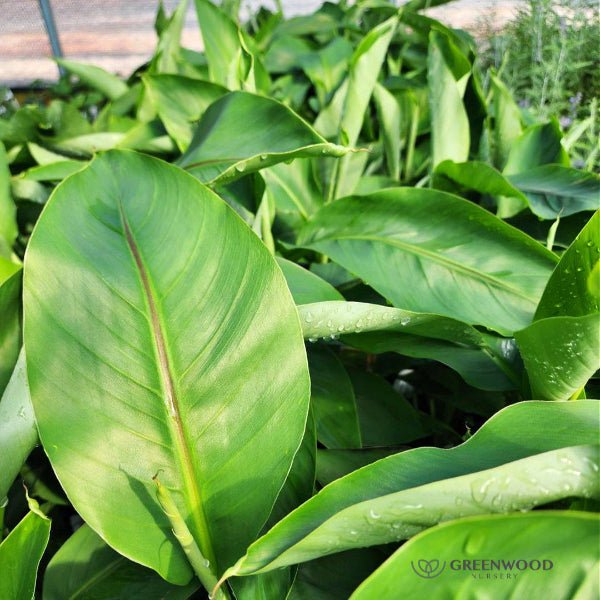
Musa basjoo (Cold Hardy Banana, Japanese Fiber Banana) is the hardiest banana plant available — a fast-growing tropical statement plant that survives winters as far north as zone 5 with proper mulching. Giant paddle-shaped leaves up to 6 feet long create an instant jungle feel around pools, patios, and garden borders, while striking yellow-orange flower bracts appear on mature plants in summer. Grows 15–18 feet tall in the ground, 8–10 feet in containers. Note: fruit is ornamental, not edible. Hardy in zones 5–10.
Best for: Tropical accent plantings, poolside landscapes, container gardening, patio and deck displays, zen gardens, and bold statement borders.
Why Gardeners Choose Musa basjoo
- Hardiest banana available: Survives zone 5 winters — far hardier than any other banana species. With heavy mulching after the first frost, the rhizome overwinters and re-sprouts vigorously in spring, often reaching 10+ feet by midsummer.
- Fastest tropical impact: Few plants deliver the dramatic scale of a banana this quickly — in-ground plants can add 6–10 feet of height in a single growing season once established.
- Massive bold foliage: Leaves up to 6 feet long create an unmistakable tropical canopy that transforms ordinary garden spaces into lush, exotic landscapes.
- Versatile placement: Equally effective in the ground as a focal point or in large containers on patios, decks, and porches — containers can be brought indoors in colder zones for winter protection.
- Ornamental flowers: Mature plants produce striking yellow-orange flower bracts in summer — a dramatic display even before considering the foliage.
Planting & Care
- Light: Full sun to partial shade — full sun produces the fastest growth and largest leaves. Tolerates partial shade but growth rate is reduced.
- Soil: Well-draining soil kept consistently moist. Musa basjoo is a heavy feeder and drinker during the growing season — it does not tolerate drought or waterlogged conditions.
- Growth rate: Very fast — one of the fastest-growing hardy plants available. Can add several feet of height per month in peak summer conditions.
- Mature size: 15–18 feet tall in the ground; 8–10 feet in containers.
- Watering: Water deeply and consistently throughout the growing season. Large leaves transpire heavily — plants in full sun may need watering every 1–2 days in hot weather.
- Feeding: Apply a high-nitrogen fertilizer regularly throughout the growing season to fuel rapid growth. Reduce feeding as temperatures drop in fall.
- Winter care (in ground): After the first hard frost kills the foliage, cut the pseudostem back to 12–18 inches. Pile 12–18 inches of straw, leaves, or wood chip mulch over the crown and rhizome. The rhizome will survive zone 5–6 winters and re-sprout in late spring.
- Winter care (containers): Move containers to an unheated but frost-free garage or basement before temperatures drop below 20°F. Reduce watering to minimal during dormancy.
- Shipping note: Larger leaves may be trimmed before shipping during the growing season to ensure safe transport. Plants arrive healthy and ready to establish.
Best Uses
- Poolside and water feature tropical accent plantings
- Bold focal points in garden borders and island beds
- Large container displays on patios, decks, and porches
- Zen gardens and tropical-themed landscapes
- Bright indoor spaces and sunrooms
- Statement plantings near entryways and structures
Grows Best In
- USDA Zones: 5–10
- Climate notes: The hardiest banana species available — the rhizome survives zone 5 winters with heavy mulching even when the foliage is killed by frost. In zones 8–10, foliage may remain evergreen year-round. In zones 5–7, treat as a die-back perennial: mulch heavily, and expect vigorous re-sprouting in late spring. Container growing is ideal for zones 5–6 where moving indoors is easier than heavy outdoor mulching.
Problem Solved
Musa basjoo is the answer for gardeners in cold climates who love the look of tropical gardens but can’t grow tender bananas outdoors — it delivers the same dramatic scale and exotic atmosphere in zones where most tropical plants can’t survive a winter.
Also the right choice for container gardeners who want maximum visual impact on a patio or deck — few plants grow this large this fast in a pot, and it can be brought indoors to overwinter when temperatures drop.
Pro Tip
In zone 5–6, the key to successful overwintering is acting before the first hard freeze — once the pseudostem is killed by cold, the rhizome is more vulnerable. Cut back and mulch while the soil is still workable in early fall rather than waiting for a killing frost. A 12–18 inch layer of straw or wood chips over the crown is enough to carry the rhizome through most zone 5 winters.
Watch: Musa basjoo in the Garden
Explore More Tropical & Statement Plants
- Browse our full selection of Fast Growing Trees & Shrubs for maximum seasonal impact.
- Create a lush underplanting beneath your banana with our Fast Growing Groundcovers.
- Pair with bold tropical companions from our Perennials collection.
- Find the right planting supplies in our Planting Supplies & Packs.
Shipping Information
- Ships in Pint pot or Quart pot — 1 plant per order, fully rooted and ready to plant.
- Larger leaves may be trimmed before shipping during the growing season to ensure safe transport.
- No state shipping restrictions — ships to all 48 contiguous states.
Frequently Asked Questions
Is the fruit edible?
No — Musa basjoo produces small ornamental fruit that is not edible. It is grown purely for its dramatic foliage and tropical appearance.
How cold hardy is it?
The rhizome survives zone 5 winters (−20°F) with heavy mulching. The foliage is killed by frost, but the plant re-sprouts vigorously in late spring.
How fast does it grow?
Very fast — one of the fastest-growing hardy plants available. In-ground plants in full sun can add several feet per month at peak growth in summer.
Can it grow in containers?
Yes — grows well in large containers (20+ gallon for best results). Container plants reach 8–10 feet and can be moved indoors for winter in colder zones.
Will it come back every year?
Yes — in zones 5–10 with proper winter care, Musa basjoo re-sprouts reliably from the rhizome each spring, often reaching full size by midsummer.
Planting Instructions
How Your Plants Are Shipped & Care Instructions
To ensure a seamless transition to your garden, please follow the specific steps below based on the type of plant you ordered:
📦 1. Container-Grown Plants
Our container-grown plants are shipped with fully established root systems nestled in premium potting media.
- Unpack & Water Instantly: Carefully remove the protective packaging and check the soil moisture. Give the pot a thorough watering until moisture runs out the bottom drainage holes.
- Acclimation Period: Place your container plant in a sheltered, partially shaded location for 2 to 3 days to help it recover from transit before moving it to full sun.
- Planting Depth: Plant at the exact same depth it was sitting in its shipping container, gently loosening the outer roots if they are encircling the root ball.
- Moisture Control: Keep the soil consistently damp but never soggy for the first few weeks as the roots expand.
🌱 2. Seedling & Liner Bare-Root Plants
Seedlings and liners are young, vibrant plants shipped without pots to make transit highly efficient.
- Immediate Attention: Unpack immediately upon arrival. If you cannot plant them right away, keep the roots moist and store them in a cool, shaded location out of the wind.
- Hydration First: Soak the roots in a bucket of water for 1 to 2 hours right before planting to wake them up.
- Planting: Spread the roots out naturally in the planting hole. Ensure the crown (where the roots meet the stem) sits right at the soil level. Water thoroughly to settle the soil around the roots.
🌾 3. Groundcover Bare-Root Plants
Groundcover bare-root bundles (like Vinca minor or Sedum) are shipped dormant or semi-dormant, ready to take off once in the ground.
- Check Moisture: Open the bundle immediately. The packing material around the roots should be damp. If planting is delayed a day or two, lightly mist the roots to keep them from drying out.
- Soak Before Planting: Soak the root systems in water for about an hour before putting them in the ground.
- Spacing & Depth: Plant them at the same depth they were growing previously, firming the soil gently over the roots to eliminate any air pockets. Water heavily right after planting and keep the area consistently moist until established.
Shipping Information
Orders containing only hard goods generally ship right away
as the inventory allows. Those items ship year-round and generally within one
week.
When ordering plants during fall or spring shipping, we will
set your order for the next available shipping week appropriate for your
location. April and May are our busiest months, and sometimes shipping delays
happen. Plants may be processed later than scheduled or the shipping department may get behind. This is not the norm, but it does sometimes happen. Please bear with us if this happens.
Our bare-root (field-grown) trees and shrubs typically arrive at the facility for shipping in November, December, and January (for fall shipping) and in February, March, April, and May (for spring shipping).
An example of month-by-month shipping would be as follows, as plants are available:
January - zones 9 - 10
February - zones 8 - 10
March - zones 7 - 10
April - zones 6 - 10
May - zones 5 - 9
June - zones 3 - 8
July - zones 3 - 7
August - zones 4 - 7
September - zones 5 - 8
October - zones 5 (some areas) - 9
November - zones 6 (some areas) - 10
December - zones 8 - 10