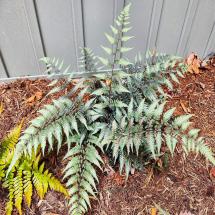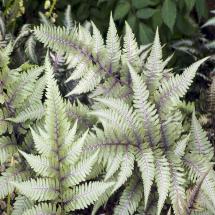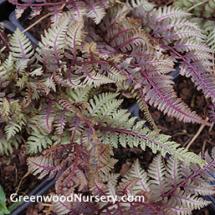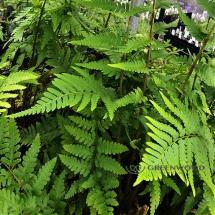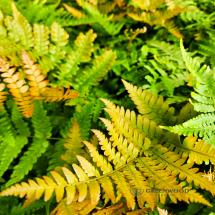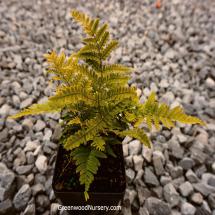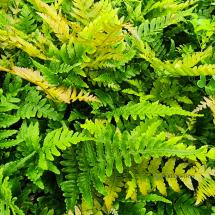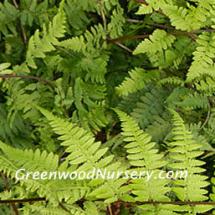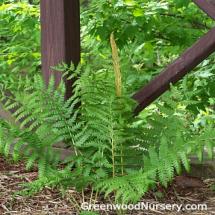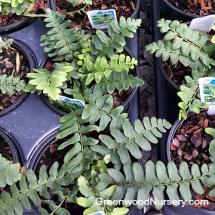
Fern Burgundy Lace, Japanese Painted, Athyrium niponicum. There has never been a more beautiful, easy to grow fern for the shade garden. The Burgundy Lace Painted Fern is a spectacular almost neon bright fern with ever-changing color and resistance to every form of extreme weather. The Painted Burgundy Lace Ferns, PP15,072, bring new foliage displays of dazzling purple with silver accents with ruby red stems. As summer progresses the leaves of this beautiful low growing fern become a gleaming shade of pewter and the ruby colors turn to a wine-red purple.
The Burgundy Lace Painted Fern grows to a foot tall and at least that wide. This makes it ideal for the front of a shaded border, mixed in with many of your flowering perennials, especially yellow flowering, and mixe nicely with the different greens of your foundations plants and woodland plants. It is a great container plant to move around in different areas of the garden to add just that right splash of color. If you’ve loved painted ferns, you owe it to yourself to order this new spectacular introduction. This one sells out fast, so don’t be disappointed and order right away.
Our Burgundy Lace Painted Ferns are shipped in one gallon trade size containers, full root system, ready to plant, and start growing. These will fill a one square foot area the first growing season.
Video: Basics on planting container grown plants
Planting Container Grown Plants Video.
Planting and caring for bare root ferns, evergreen ferns and container ferns:
Fern plants grow mostly in lightly shaded to fully shaded areas. They prefer moist, rich humus soil with a slightly acid pH (5.3 to 5.5 pH range). Sphagnum peat moss is good to add to the soil for holding moisture and will add some acid to the soil as it decomposes.
The hole should not only be large enough to hold the tuber, but allowing at least an inch or two from the top of the tuber to the top of the hole. The smaller ferns, such as Maidenhair fern, can be planted about 18 to 24 inches apart. The edible Ostrich ferns, Christmas ferns and Royal Ferns grow larger and should be planted no closer than 24 inches apart.
Top with a good layer of mulch (shredded bark mulch, aged compost or aged manure mix) or a light layer of straw for added moisture and to keep the ground cool. Water as needed to keep the soil moist. As the ground warms in late spring, the fronds will begin sprouting.
Deciding which end of the tuber is up can be daunting. Sometimes the tip is visible on the top portion and other times there will be root hairs extending from the bottom. If in doubt, the tuber can be planted in a sideways position.
Cutting the fall die back to the ground and applying a fresh layer of mulch will help to protect the fern tubers from popping out of the ground over winter freeze/thaw cycles as well as from squirrels or other critters digging them up for winter food.